
The Met Gala has never been just another celebrity red carpet. Every year, it becomes fashion’s biggest stage, where designers, stylists, and celebrities compete to create the one look people will still be discussing months later. Some outfits fade into the background before the evening ends. Others immediately become part of fashion history.
The 2026 Met Gala delivered exactly that kind of spectacle. Built around the Costume Institute’s exhibition, “Costume Art,” with the dress code “Fashion is Art,” attendees treated clothing as sculpture, performance, and storytelling rather than simply formalwear. While dozens of celebrities embraced the theme, a handful of looks completely dominated social media, fashion publications, and group chats around the world.
Why This Year’s Met Gala Felt Different
Every Met Gala has memorable outfits, but 2026 stood apart because celebrities appeared genuinely committed to interpreting the exhibition instead of simply wearing expensive couture. Rather than relying on dramatic trains or oversized gowns alone, many guests referenced paintings, sculptures, historical movements, and artistic techniques through construction, color, and craftsmanship.
Fashion critics praised the event for rewarding creativity over shock value. Instead of competing for viral attention through exaggerated silhouettes, many attendees presented looks that revealed new details the longer you examined them. That made the red carpet feel less like a celebrity parade and more like a curated gallery exhibition.
Several themes appeared repeatedly throughout the evening:
- Sculptural tailoring
- Hand-painted fabrics
- Metallic finishes
- References to classical art
- Architectural silhouettes
- Couture-level craftsmanship
1. Beyoncé Delivered a Masterclass in Fashion as Performance
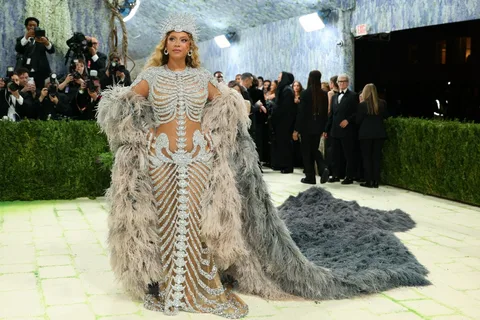
There was enormous anticipation surrounding Beyoncé long before she stepped onto the famous Metropolitan Museum steps. As one of the event’s co-chairs, expectations were exceptionally high, and she responded with one of the evening’s defining fashion moments.
Her custom look balanced glamour with artistic storytelling, proving once again why she remains one of the most influential figures on any red carpet. The craftsmanship, styling, and confidence combined into an appearance that immediately flooded fashion publications and social media feeds worldwide.
Why the look resonated so strongly:
- Perfectly interpreted the dress code.
- Balanced elegance with theatricality.
- Featured exceptional couture craftsmanship.
- Became one of the night’s most photographed outfits.
- Reinforced Beyoncé’s reputation for meticulous fashion choices.
2. Emma Chamberlain Once Again Proved She Understands the Met Gala
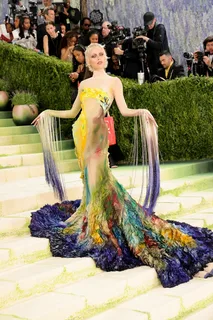
Few digital creators have adapted to the Met Gala quite like Emma Chamberlain. Instead of trying to imitate Hollywood glamour, she consistently approaches the event with individuality.
Her hand-painted custom Mugler creation referenced one of the fashion house’s iconic archival butterfly designs while introducing a modern artistic interpretation. Fashion editors praised the look for respecting fashion history without simply copying it. Readers also voted it among the evening’s standout appearances.
Elements that made it memorable:
| Detail | Why It Worked |
| Hand-painted finish | Added genuine artistic value |
| Mugler inspiration | Honored fashion history |
| Contemporary styling | Felt modern instead of nostalgic |
| Minimal accessories | Allowed the dress to remain the focus |
3. Lisa Turned the Red Carpet Into Wearable Sculpture
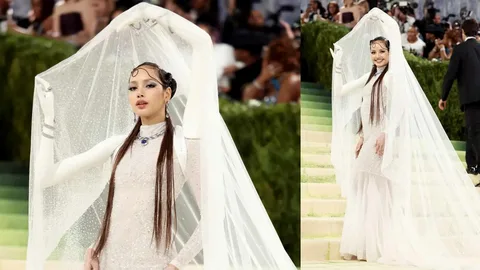
Lisa approached the theme from an entirely different direction. Working with designer Robert Wun, her gown incorporated three-dimensional body forms inspired by traditional Thai dance and modern sculpture.
Instead of relying on sparkle or dramatic volume, the dress invited viewers to look closer. The intricate construction became one of the evening’s most discussed fashion details and demonstrated how deeply some attendees embraced the artistic brief.
Highlights included:
- Three-dimensional sculptural detailing.
- References to Thai artistic traditions.
- Exceptional couture construction.
- Strong interpretation of “Fashion is Art.”
- One of the night’s most original concepts.
4. Anok Yai Became a Living Bronze Statue
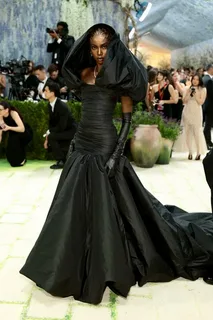
Some celebrities wore beautiful gowns. Anok Yai became an artwork herself.
Working closely with her creative team, she transformed into what resembled a bronze devotional sculpture. Prosthetic body paint, carefully chosen fabrics, and dramatic styling blurred the line between fashion and performance art. The result became one of the evening’s boldest interpretations of the exhibition’s exploration of the human body.
What made the look unforgettable:
- Bronze-inspired body transformation.
- Strong conceptual storytelling.
- Outstanding makeup artistry.
- Powerful visual impact.
- Complete commitment to the exhibition theme.
5. Rihanna Closed the Carpet With a Look Worth Waiting For
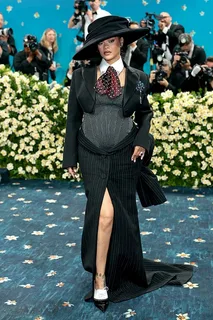
No one owns a Met Gala finale quite like Rihanna. Arriving after the livestream had ended has become part of her tradition, and once again she ensured the final entrance was also one of the evening’s most memorable. Her sculptural Maison Margiela creation, designed by Glenn Martens, perfectly reflected the “Fashion Is Art” dress code by treating the body as the centerpiece of a living artwork. The intricate embroidery alone required more than 1,300 hours of work and featured over 115,000 crystal beads, antique jewels, and metallic details.
The gown’s dramatic cape created the illusion of a picture frame surrounding Rihanna, reinforcing the exhibition’s idea that clothing can exist alongside fine art rather than simply complement it. It wasn’t just another glamorous dress. It felt like a museum installation brought to life, which explains why fashion editors almost immediately placed it among the night’s defining looks.
Why it dominated online conversations:
- Spectacular Maison Margiela craftsmanship.
- Thousands of hand-applied embellishments.
- Architectural silhouette unlike anything else that evening.
- Perfect interpretation of the exhibition’s artistic concept.
- Another unforgettable Met Gala moment in Rihanna’s long fashion legacy.
6. Kim Kardashian Turned Sculpture Into Couture
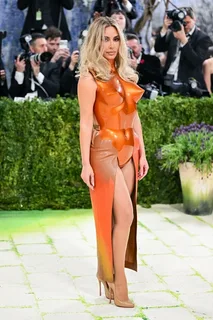
Kim Kardashian has rarely played it safe at the Met Gala, and 2026 continued that tradition. Working with designer Whitaker Malem and British pop artist Allen Jones, she wore a molded metallic breastplate paired with a leather skirt that blurred the line between wearable fashion and contemporary sculpture. Rather than decorating the garment with artistic references, the garment itself became the artwork.
The collaboration reflected one of the exhibition’s central themes: the relationship between the dressed body and artistic expression. Instead of relying on dramatic volume or elaborate embellishment, Kim’s structured silhouette demonstrated how fashion could communicate through shape and material alone. It quickly became one of the most photographed looks of the night.
The design stood out because it featured:
- Sculptural metallic body armor.
- Collaboration between fashion and fine art.
- Strong architectural lines.
- Minimal styling that emphasized construction.
- A bold interpretation of wearable sculpture.
7. Angela Bassett Proved That Elegance Can Still Steal the Show
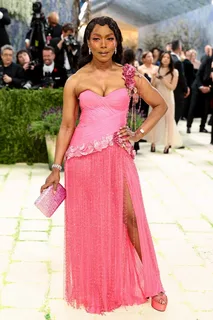
Not every unforgettable Met Gala outfit needs to rely on theatrical construction. Angela Bassett showed that careful storytelling can create just as much impact. Her custom Prabal Gurung gown drew inspiration from Girl in Pink Dress (1927), the celebrated painting by Laura Wheeler Waring housed in the Metropolitan Museum of Art itself.
The result balanced historical reference with modern couture. Instead of recreating the artwork literally, the design captured its spirit through color, proportion, and graceful tailoring. Critics praised the look because it respected both the exhibition and the artist while remaining unmistakably elegant on its own.
Reasons fashion critics loved the look:
- Inspired by a painting from the Met collection.
- Beautiful balance of history and couture.
- Sophisticated silhouette.
- Exceptional tailoring.
- One of the evening’s strongest examples of wearable art.
The Biggest Fashion Trends That Defined the Night
Beyond individual celebrities, the 2026 Met Gala revealed several clear creative directions. Designers appeared less interested in producing viral shock moments and more interested in craftsmanship, artistic references, and sculptural construction. Many collections required viewers to study the garments before appreciating the level of detail involved.
Another noticeable trend was the emphasis on the body itself as part of the artwork. Rather than hiding silhouettes beneath oversized gowns, many designers shaped garments to interact directly with movement, posture, and anatomy, reflecting the Costume Institute exhibition’s exploration of the dressed body.
The evening’s defining trends included:
| Trend | Why It Stood Out |
| Sculptural silhouettes | Fashion resembled museum sculptures. |
| Metallic finishes | Added an artistic, gallery-like quality. |
| Classical art references | Connected couture with art history. |
| Hand-painted fabrics | Made garments feel one of a kind. |
| Architectural tailoring | Focused attention on shape and proportion. |
| Bronze and stone-inspired textures | Reinforced the exhibition’s artistic concept. |
Why These Looks Captured the Internet
Every Met Gala produces viral moments, but not every outfit remains memorable after the headlines fade. The seven looks that dominated conversations succeeded because they offered more than visual spectacle. Each presented a clear creative idea supported by extraordinary craftsmanship.
Social media rewarded those details. Fashion enthusiasts shared close-up images of embroidery, sculptural construction, and artistic inspiration rather than simply reposting celebrity photographs. The conversation shifted toward design itself, something fashion editors had hoped to see for years.
Several factors drove online engagement:
- Strong interpretation of the theme.
- Exceptional couture craftsmanship.
- Clear storytelling behind each design.
- Distinctive silhouettes.
- Extensive discussion across fashion publications and social media.
- High replay value through close-up photography.
Frequently Asked Questions
1. What was the theme of the 2026 Met Gala?
The 2026 Met Gala celebrated the Costume Institute exhibition “Costume Art” with the dress code “Fashion Is Art,” encouraging attendees to treat clothing as artistic expression.
2. Who had one of the most talked-about looks?
Rihanna, Beyoncé, Emma Chamberlain, Lisa, Anok Yai, Kim Kardashian, and Angela Bassett were widely recognized among the evening’s standout dressers.
3. Why did Rihanna’s outfit receive so much attention?
Her Maison Margiela ensemble combined architectural design with extraordinary craftsmanship, including more than 115,000 crystal beads and over 1,300 hours of embroidery work.
4. Which trend dominated the 2026 Met Gala?
Sculptural silhouettes, artistic references, metallic finishes, and couture craftsmanship emerged as the defining visual themes throughout the evening.
5. Why is the Met Gala so influential in fashion?
The event brings together leading designers, celebrities, and artists on a single global stage, often setting creative conversations that influence fashion throughout the rest of the year.
Conclusion:
The 2026 Met Gala reminded everyone why the event remains fashion’s most anticipated night. Rather than chasing headlines through spectacle alone, many attendees embraced craftsmanship, artistic storytelling, and thoughtful interpretation of the theme. The result was a red carpet filled with looks that invited conversation long after the museum doors closed, proving that fashion is often at its most memorable when it behaves like art.
Call to Action
If this year’s Met Gala sparked your curiosity, don’t stop with the celebrity photos. Explore the designers, the artistic references, and the craftsmanship behind each creation. Looking beyond the headlines reveals why these gowns became far more than viral moments and why the Met Gala continues to shape fashion’s creative future.