

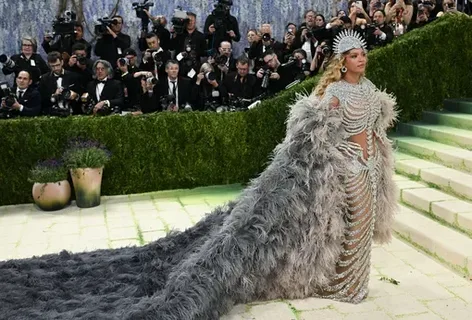
Some Met Gala outfits are remembered because they’re beautiful. Others become memorable because they’re controversial. Every so often, a celebrity arrives wearing something that completely changes the conversation. Instead of asking whether the dress is attractive, people begin asking what it means, why it was created, and how every tiny detail fits the evening’s theme.
That was the reaction to Beyoncé’s skeleton-inspired Met Gala look. Within minutes of her arrival, photos flooded social media, fashion editors rushed to publish first impressions, and millions of viewers started zooming in on embroidery, construction, and symbolism. The outfit wasn’t designed to blend into a lineup of glamorous gowns. It demanded attention without relying on shock value alone, proving once again that Beyoncé understands the difference between simply wearing couture and creating a cultural moment.
Why Every Beyoncé Fashion Moment Feels Like an Event
Beyoncé rarely treats public appearances as isolated fashion opportunities. Every outfit exists within a much larger story about music, performance, art, and personal branding. That consistency is one reason her red carpet appearances receive attention far beyond entertainment media.
Years of carefully curated visuals have trained audiences to expect intention behind every decision. Fans look for references, hidden meanings, historical inspiration, and subtle storytelling because previous appearances have rewarded that level of attention. By the time Beyoncé steps onto a major red carpet, people already assume every stitch serves a purpose.
Several elements contribute to that anticipation:
- Consistent visual storytelling.
- Long-term collaboration with elite stylists.
- Carefully selected designers.
- Strong personal brand identity.
- Limited public appearances that create exclusivity.
- Attention to symbolism over trend chasing.
The Skeleton Motif Was About More Than Anatomy
At first glance, the skeletal details appeared dramatic. Looking closer revealed something more thoughtful. Throughout art history, skeletons have symbolized mortality, transformation, resilience, and the hidden structure supporting visible beauty. Those ideas fit naturally within a fashion event celebrating clothing as artistic expression.
Instead of using bones purely for theatrical effect, the design treated them almost like architectural lines beneath couture. They reminded viewers that every masterpiece, whether a painting, sculpture, or garment, depends on an invisible framework. Fashion often celebrates surface beauty, yet construction is what allows extraordinary design to exist.
The symbolism could be interpreted through several lenses:
| Visual Element | Possible Artistic Meaning |
| Skeleton details | Strength beneath beauty |
| Sculptural structure | Fashion as architecture |
| Metallic finishes | Museum-inspired artistry |
| Layered construction | Hidden craftsmanship |
| Body-focused silhouette | Human form as art |
Why Fashion Editors Immediately Took Notice
Fashion critics evaluate more than celebrity popularity. They examine tailoring, craftsmanship, originality, relationship to the event’s theme, and execution. Beyoncé’s ensemble scored highly because it balanced concept with wearability rather than sacrificing one for the other.
Many themed red carpet looks become costumes because they prioritize literal interpretation over elegant design. Beyoncé avoided that trap. The skeleton references remained sophisticated enough for couture while still communicating a recognizable artistic idea. That balance is difficult to achieve, which explains why editors highlighted the outfit almost immediately after her arrival.
Among the strongest qualities were:
- Clear interpretation of the exhibition theme.
- Exceptional couture craftsmanship.
- Sophisticated rather than theatrical styling.
- Strong balance between symbolism and elegance.
- Memorable without appearing gimmicky.
Every Detail Supported the Story
Great couture rewards close inspection. From a distance, audiences notice silhouette and color. Up close, they begin discovering embroidery, texture, beadwork, fabric manipulation, and construction techniques that transform a beautiful garment into wearable art.
Beyoncé’s look invited exactly that kind of examination. Fashion photographers captured detail shots because the craftsmanship deserved attention on its own. Each close-up revealed additional layers of work that casual viewers might miss during a livestream but appreciate through editorial photography afterward.
The craftsmanship included elements such as:
- Precision embroidery.
- Sculptural tailoring.
- Hand-finished embellishments.
- Carefully engineered proportions.
- Luxury fabric combinations.
- Thoughtfully coordinated accessories.
The Internet Did What It Always Does
Within minutes, social media split into familiar groups. Some viewers celebrated the artistic ambition. Others debated the symbolism. Fashion creators posted breakdown videos explaining references, while countless users shared memes, reactions, and side-by-side comparisons with historical artwork.
That level of conversation is exactly what successful Met Gala fashion aims to generate. The event isn’t designed around universal approval. It’s designed around cultural discussion. An outfit that sparks thoughtful debate often leaves a longer-lasting impression than one everyone simply agrees is beautiful.
The online conversation focused on:
- Symbolism behind the skeleton motif.
- Couture craftsmanship.
- Comparisons with previous Beyoncé Met Gala appearances.
- Designer interpretation of the theme.
- Artistic references.
- Fan theories and fashion analysis.
Why Celebrity Fashion Is Really a Branding Strategy
People often think celebrity fashion is about clothing alone. In reality, every major appearance contributes to long-term personal branding. A carefully chosen outfit reinforces public identity, communicates values, and keeps celebrities relevant long after the cameras stop flashing.
For Beyoncé, fashion has become part of her storytelling language. Music, visuals, performances, and red carpet appearances all support the same larger narrative of artistic excellence and intentional creativity. That consistency increases public recognition while strengthening partnerships with luxury fashion houses.
Branding benefits of memorable fashion moments include:
- Global media coverage.
- Increased social media engagement.
- Stronger relationships with luxury brands.
- Reinforcement of personal identity.
- Continued cultural relevance.
- Long-term visual recognition.
Behind Every Viral Red Carpet Moment Is a Business Decision
When people see a celebrity step onto the Met Gala carpet, they usually focus on the finished outfit. What remains invisible is the months of planning that came before it. Designers sketch dozens of ideas, stylists refine concepts, artisans spend hundreds of hours creating garments by hand, and publicists carefully coordinate the reveal. A single appearance represents the work of an entire creative team.
For luxury fashion houses, the Met Gala is one of the most valuable marketing opportunities of the year. A successful look generates worldwide press coverage that traditional advertising budgets would struggle to match. Instead of buying another billboard or television campaign, brands place their craftsmanship on one of fashion’s most photographed stages. When the collaboration works, both the designer and the celebrity benefit.
The business value extends across multiple areas:
| Business Benefit | Why It Matters |
| Global media coverage | Reaches millions without traditional advertising |
| Social media engagement | Keeps the brand part of cultural conversations |
| Editorial exposure | Fashion magazines provide long-term visibility |
| Brand prestige | Association with high-profile celebrities strengthens reputation |
| Search traffic | Online interest continues for weeks after the event |
| Customer aspiration | Couture influences future ready-to-wear collections |
The Power of Dressing for the Camera Instead of the Crowd
One reason Beyoncé’s Met Gala appearances consistently succeed is that they’re designed with photography in mind. The Met Gala isn’t experienced only by the people standing on the museum steps. It’s viewed through thousands of photographs, videos, close-ups, livestreams, and magazine covers. A successful outfit needs to work from every angle.
The skeleton-inspired design offered exactly that flexibility. From a distance, it created a dramatic silhouette. Up close, photographers captured intricate embellishments and structural details that rewarded closer inspection. Every image revealed something slightly different, encouraging people to revisit the look instead of scrolling past it after a single glance.
Features that photographed particularly well included:
- Sculptural silhouette.
- Intricate embroidery.
- Contrasting textures.
- Reflective embellishments.
- Balanced proportions.
- Carefully coordinated accessories.
Why Fashion Lovers Appreciated the Craftsmanship
Luxury fashion enthusiasts often separate clothing into two categories: garments that are expensive and garments that are genuinely well made. The difference becomes obvious when examining couture construction. Handwork, pattern engineering, and finishing techniques create pieces that cannot easily be replicated through mass production.
Beyoncé’s look received praise because the craftsmanship supported the concept instead of competing with it. The skeleton motif wasn’t printed onto fabric or added as decoration. It appeared integrated into the garment’s construction, giving the impression that the design had been built from the inside outward.
Details that stood out to fashion observers included:
- Precision hand embroidery.
- Sculptural pattern cutting.
- High-end fabric selection.
- Clean finishing techniques.
- Balanced visual composition.
- Couture-level construction.
What Fashion Brands Can Learn From This Moment
Not every business has access to the Met Gala, but every brand can learn something from why this outfit attracted so much attention. The strongest marketing rarely depends on being the loudest. It comes from having a clear idea and executing it consistently.
Beyoncé’s appearance demonstrated that audiences respond to authenticity, craftsmanship, and thoughtful storytelling. Rather than chasing trends, successful brands build recognizable identities that customers associate with quality and originality. That’s true whether the business sells couture gowns or everyday clothing.
Practical lessons for fashion businesses include:
- Build a recognizable visual identity.
- Prioritize quality over quantity.
- Tell stories instead of simply promoting products.
- Invest in craftsmanship that customers can see.
- Stay consistent across every public appearance.
- Create moments people want to share organically.
The Lasting Influence of a Great Met Gala Look
Many red carpet outfits dominate headlines for a day and disappear. Others continue appearing in fashion discussions years later because they capture something bigger than a single event. They influence future collections, inspire editorial photography, and become reference points for stylists and designers.
Beyoncé’s skeleton-inspired ensemble has the qualities that help fashion moments endure. It combined a clear artistic concept, exceptional craftsmanship, and a celebrity whose influence extends well beyond music. Whether people admired the symbolism, the tailoring, or the sheer ambition behind the design, the outfit achieved the one thing every Met Gala guest hopes for: it remained part of the conversation long after the carpet closed.
Its long-term impact may include:
- Inspiration for future couture collections.
- Continued editorial references.
- Influence on red carpet styling.
- Increased appreciation for conceptual fashion.
- Greater attention to artistic storytelling in luxury design.
Frequently Asked Questions
1. Why did Beyoncé’s Met Gala skeleton look receive so much attention?
The look combined couture craftsmanship, artistic symbolism, and a strong interpretation of the Met Gala theme, making it one of the night’s most discussed fashion moments.
2. What did the skeleton design symbolize?
Many fashion critics interpreted the skeletal elements as representing structure, transformation, resilience, and the hidden framework behind beauty and artistic creation.
3. Why is the Met Gala important for luxury fashion brands?
The Met Gala provides global exposure, extensive media coverage, and an opportunity for designers to showcase couture craftsmanship before an international audience.
4. How does celebrity fashion help personal branding?
High-profile fashion appearances reinforce a celebrity’s identity, generate media attention, strengthen luxury partnerships, and keep them culturally relevant.
5. What can fashion entrepreneurs learn from this look?
The biggest lesson is that memorable brands are built through consistent storytelling, quality craftsmanship, and clear creative direction rather than chasing short-term trends.
Conclusion:
Beyoncé’s Met Gala skeleton look succeeded because it offered far more than visual drama. It blended fashion, symbolism, craftsmanship, and branding into a single statement that encouraged people to look closer rather than simply look once. In an event built around unforgettable style, that ability to create lasting conversation remains one of the strongest measures of success.
Call to Action
If you’re fascinated by the business behind fashion, don’t stop at admiring the finished look. Explore the designers, artisans, stylists, and creative decisions that brought it to life. Understanding the work behind moments like this reveals why great fashion continues to influence culture long after the red carpet has been rolled away.